
A smart rebound in the stock market and sustained capital inflows restricted the rupee loss

The Indian services sector activity fell to a six-month low in September, as new business inflows rose at the slowest rates since March, amid inflationary pressures and competitive conditions, a monthly survey said. The seasonally adjusted S&P Global India Services PMI Business Activity Index fell to 54.3 in September, from 57.2 in August, highlighting the weakest rate of expansion since March. For the fourteenth straight month, the services sector witnessed an expansion in output. In Purchasing Managers' Index (PMI) parlance, a print above 50 means expansion, while a score below 50 denotes contraction.

Yesterday, we brought you the first part in a series that explores the dynamics of interpersonal relationships with the advent of online social networking. Today, Abhishek Mande speaks to another youngster to analyse how online interactions are influencing lives.

Indian economy is expected to grow 10.5 per cent or more in the current fiscal, Niti Aayog Vice Chairman Rajiv Kumar said on Thursday. Speaking at a virtual conference organised by the Public Affairs Forum of India (PAFI), he also said that modernisation of the retail sector is very much on the cards. "India Purchasing Managers' Index (PMI) for both manufacturing and services has shown a very smart uptick last month. "This (Indian economy) will strengthen even further," he said. "I expect Indian economy to grow 10.5 per cent or higher in FY 22," he noted.

The overall rank has been propped by the third criteria of innovation and sophistication, which have ranks of 59 and 57 respectively.

Fed policymakers' deepening uncertainty about their own projections has resulted in the central bank sending mixed messages
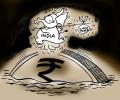
Fitch Ratings on Wednesday said India's high fiscal deficit would pose a challenge in lowering the debt to GDP ratio, which is expected to rise above 90 per cent in the next five years. It said India entered the pandemic with little fiscal headroom from a rating perspective. Its general government debt/GDP ratio stood at 72 per cent in 2019, against a median of 42 per cent for 'BBB' rated peers.

His fresh attack came a day after he said the government is coming up with 'excuses' to stop the Kanyakumari-to-Kashmir yatra, which is currently in Haryana and will enter the national capital on Saturday.

Clearly, the domestic market has taken sharp knocks in April, which is likely to be visible in May as well, said analysts tracking the market, as FMCG companies are grappling with improving capacity utilisation and dealing with labour shortage.

An opportunity to enter a burgeoning sector at a low valuation and favourable policies are propelling some of India's largest corporate groups to scoop up drone start-ups. "Indian corporations lost the race in aerospace and space tech. "No one wants to miss the bus this time. "These are seasoned businessmen and they realise that the market cap of tech companies with problem-solving capabilities will exponentially rise in future," says Vipul Singh, CEO of Aarav Unmanned Systems (AUS).

'Nehru wanted to strengthen industries by exploiting agriculture and that policy was continued by successive governments.'

'One of the biggest employment generators, the MSMEs, have not got much from the government.'

Is India witnessing jobless growth or is there actually no issue with employment? The real story is between the first two suggesting that though there is sufficient employment, the challenge is to create well-paying quality jobs, says Amitabh Kant.

'With 87 per cent of the votes counted, Ardern's center-left Labour Party has won 48.9 per cent of the vote, meaning her party looks likely to score the highest result that any party has achieved since the current political system was introduced in 1996,' CNN reported.

It's easy to say investors should focus on fundamentals but this risk can have a significant and lasting impact
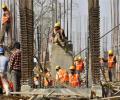
India's economy has bounced back amazingly from the Covid-19 pandemic and nationwide lockdown over the last one year, but it is not out of the woods yet, according to the World Bank, which in its latest report has predicted that the country's real GDP growth for fiscal year 21/22 could range from 7.5 to 12.5 per cent.

'Have a candid discussion with your management and raise your concerns,' suggests HR Guru Mayank Rautela.

Housing sales are likely to be hit, especially in affordable and mid-income categories, following the RBI's decision to hike repo rate, according to real estate developers and consultants. However, the impact of RBI's decision to raise the benchmark lending rate by 50 basis points to 5.40 per cent is expected to be for a short term, they added. This is the third consecutive rate hike after a 40 basis points and 50 basis points increase in May and June, respectively.

On the Sensex chart, L&T, ONGC, HCL Tech, NTPC, Axis Bank and Infosys were major gainers. NSE Nifty ended with a gain of 18.10 points at 14,956.20.

At this point, it is crucial to think of solutions that will help flatten the curve and also generate income, says Pratyush Banerjee.

The nation is on Day 2 of the 21-day lockdown to curb the spread of coronavirus. People buying essential supplies maintaining social distancing is now become a feature across the country.

Data on the real value of the currency against other currencies tells a different story.

Mumbai saw an average 46 per cent decline in congestion during the morning rush hour on Tuesday. New Delhi's data also showed an average 34 per cent decline in congestion during morning.

Dollar's strength and falling crude oil prices force downward revision of 2015 growth forecast.

In signs of sluggishness in the labour market, hiring activities declined in May as employers remained cautious tracking macro economic conditions.

Google of food, Zomato is keen to do more acquisitions in 2015.

Five per cent growth is disappointing but only after having reached nine per cent. However, it is still not all that bad, says Andrew Michael Spence.
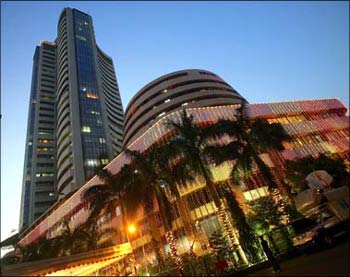
It will be difficult for the Indian equity to outperform overall growth to the extent bullish observers expect.

The WTO toolkit provides various instruments to deal with such situations - anti-dumping duties, countervailing duties and safeguard measures.
